
Claude Agent Teams: Why AI Coding Is About to Feel Like Managing a Real Engineering Squad
Building multi-agent coding systems that plan, review, and ship like real engineers

most people still use AI coding tools like this:
One long prompt.
One giant conversation.
One “super engineer” doing everything.
Backend, frontend, tests, refactors, docs - all crammed into a single context window.
it works… until it doesn’t. because this approach is prone to failure.
context spills.
decisions get forgotten.
you end up re-explaining things the model already “knew”.
while researching Claude Code deeply over the last weeks, one thing became very clear to me:
the problem isn’t prompt quality. the problem is organizational structure.
and that’s exactly what Claude Agent Teams introduced just now 🔥
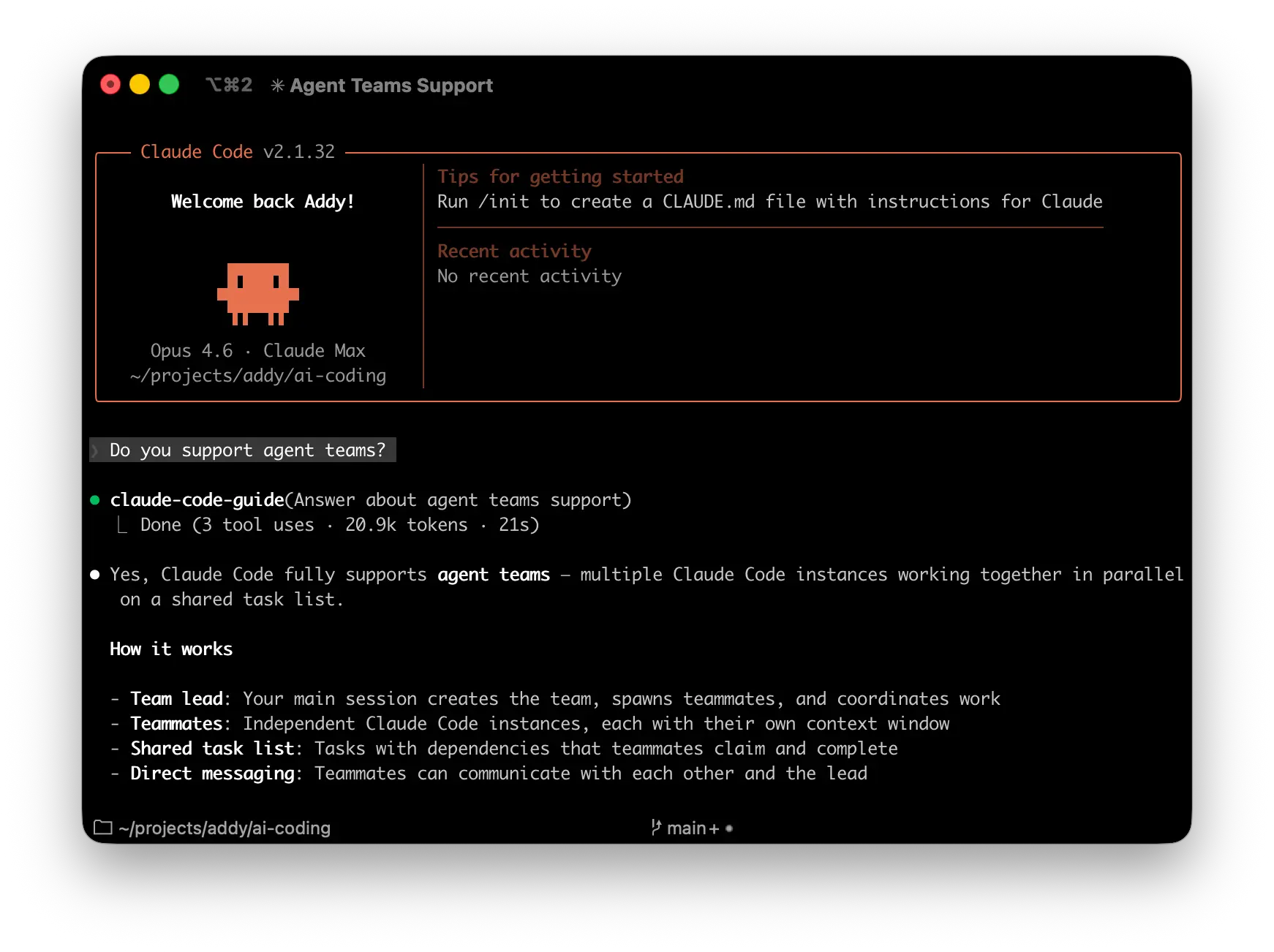
helpful links to places I sourced my info from:
The Big Mental Shift: From Prompting to Orchestration
we usually ask:
“How do I make the AI smarter?”
Claude Agent Teams nudges you toward a better question:
“How do I structure the work so intelligence compounds instead of collapsing?”
in real software companies, they don’t hire one engineer to:
design the system
write backend and frontend
test everything
coordinate changes
well, in some they do 😅.. but that’s needer sustainable or okay
so to tackle that (or what 99% of companies still do).. they have teams with roles.
Claude Agent Teams applies that exact idea to AI coding.
Think in Salaries, Not Tokens 💰
here’s the analogy that made everything click (and engaging 😄) for me .
p.s. i bet after some more years, tokens for these agent teams would cost more than hiring actual devs 👀
now, imagine a small product squad:
Team lead / Architect – ~€160k
- breaks down work, coordinates, reviews decisionsBackend Engineer – ~€120k
- APIs, DB models, business logicFrontend Dev – ~€100k
- UI, state management, UX flowsQA – ~€90k
- test suites, regressions, edge cases
Claude Agent Teams maps shockingly well onto this model:
The lead runs on a stronger (more expensive) model (sonner/opus?)
Teammates run on cheaper, focused models (haiku?)
work is tracked via a shared task board (like Jira/Linear..)
communication happens via inboxes (like in Slack)
instead of paying one “super AI” to do everything sequentially, you build a balanced AI org. 👇
✔️ same budget
✔️ higher throughput
✔️ less context switching
What Claude Agent Teams Actually Are
Claude Agent Teams is the newest feature in Claude Code that allows multiple Claude agents to collaborate on the same project
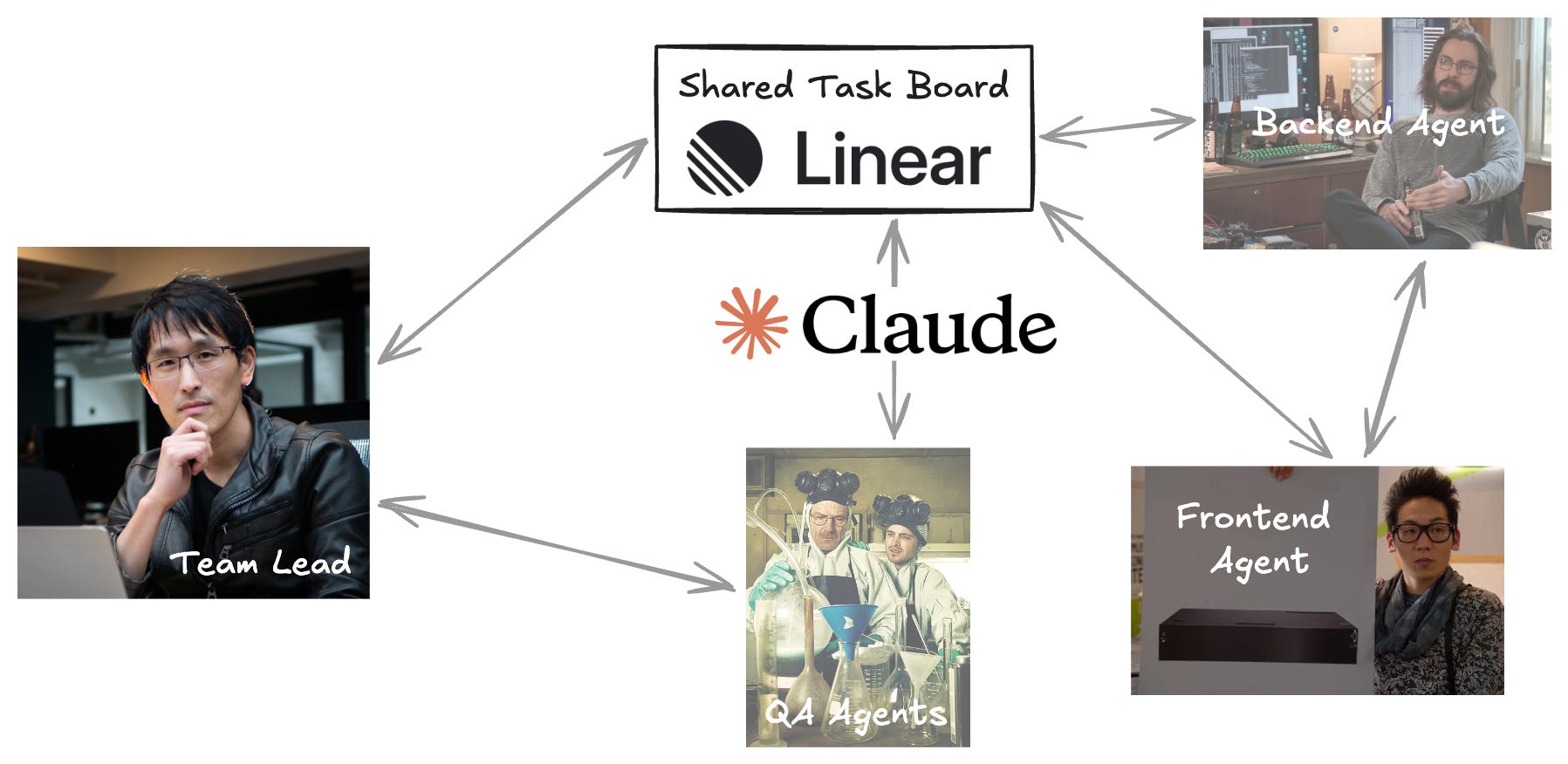
each team has:
A team lead
Your main Claude Code session. It spawns agents, assigns tasks, and synthesizes results.Teammates
Independent Claude Code sessions with their own context windows and role-specific instructions.A shared task list
A file-backed task board with task states and dependencies.A mailbox system
Agents send each other structured messages by appending JSON to inbox files.
you’re not “chatting harder”. you’re designing a system.
Copy-Paste: Spawning Your First Team
here’s a minimal but powerful Claude Code prompt you can literally paste:
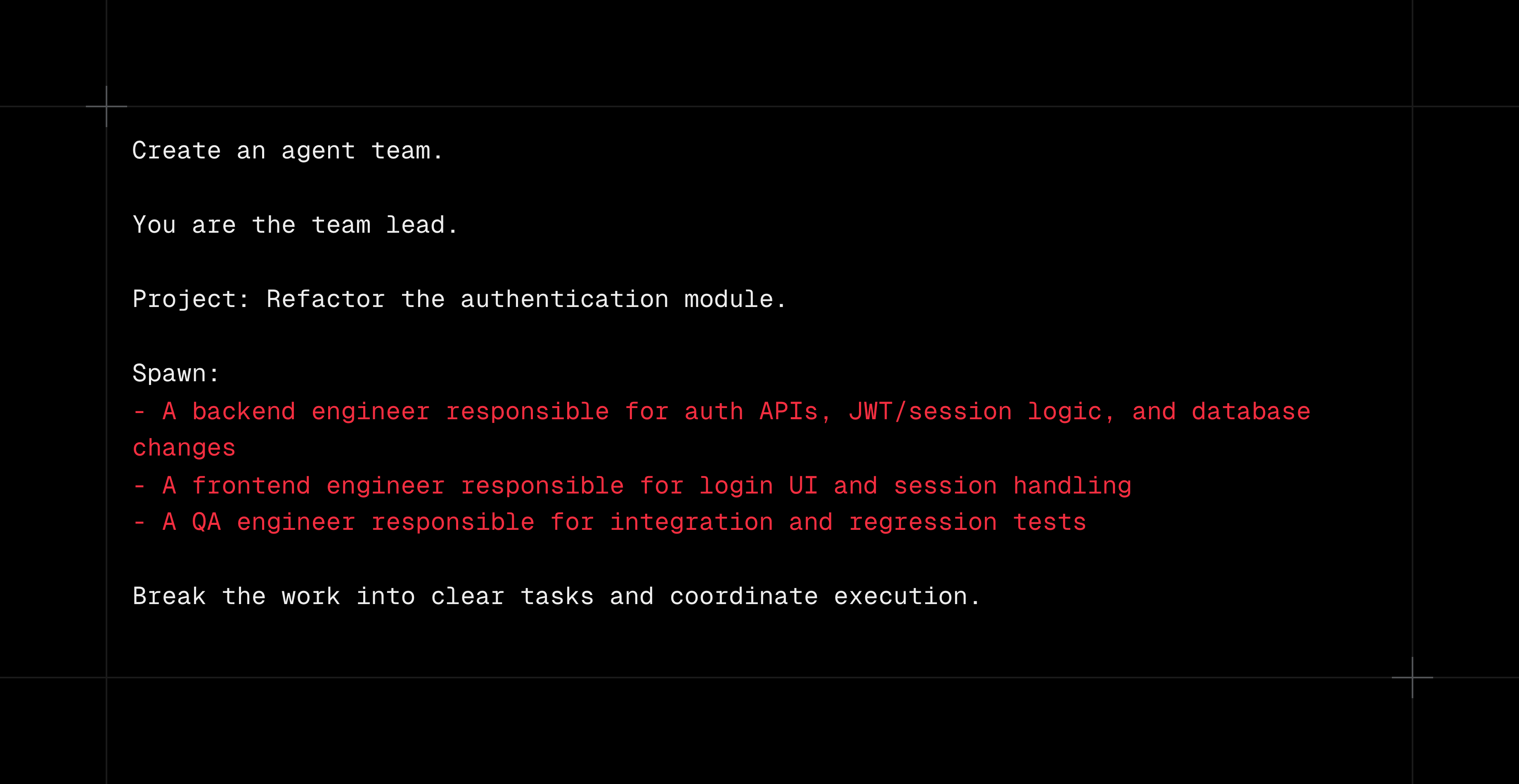
Claude will:
Spawn independent agents
Create a shared task list
Start coordination between roles
at this point, your job shifts from prompting to orchestrating
Under the Hood: Why This Feels Like a Real Team
Claude Agent Teams are file-backed:
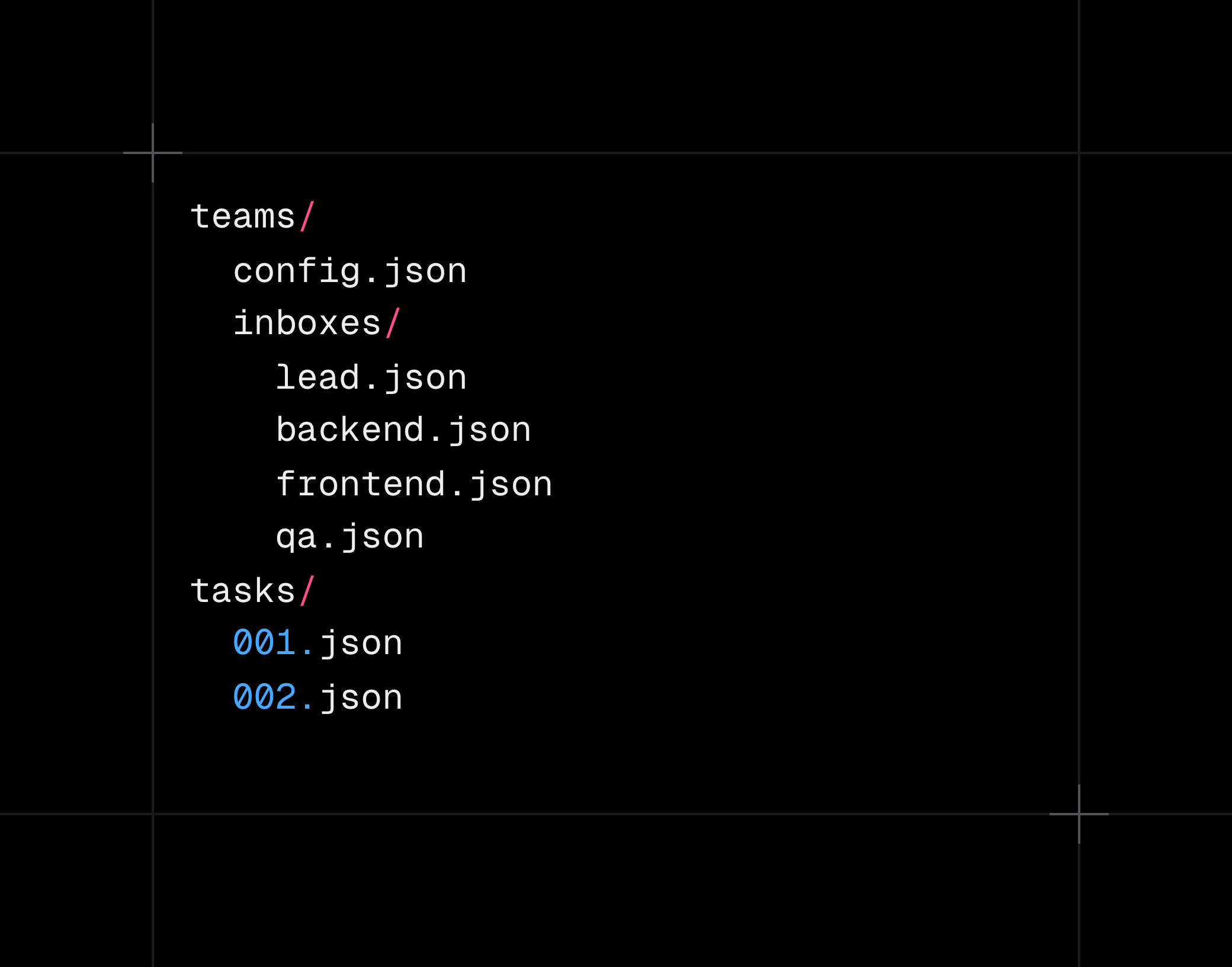
sending a message = appending JSON to an inbox
claiming a task = updating a task file
the lead’s inbox becomes a full audit log
this is AI collaboration designed like software, not chat 🚀
Agent Teams vs Subagents
Claude already had subagents - these are different.
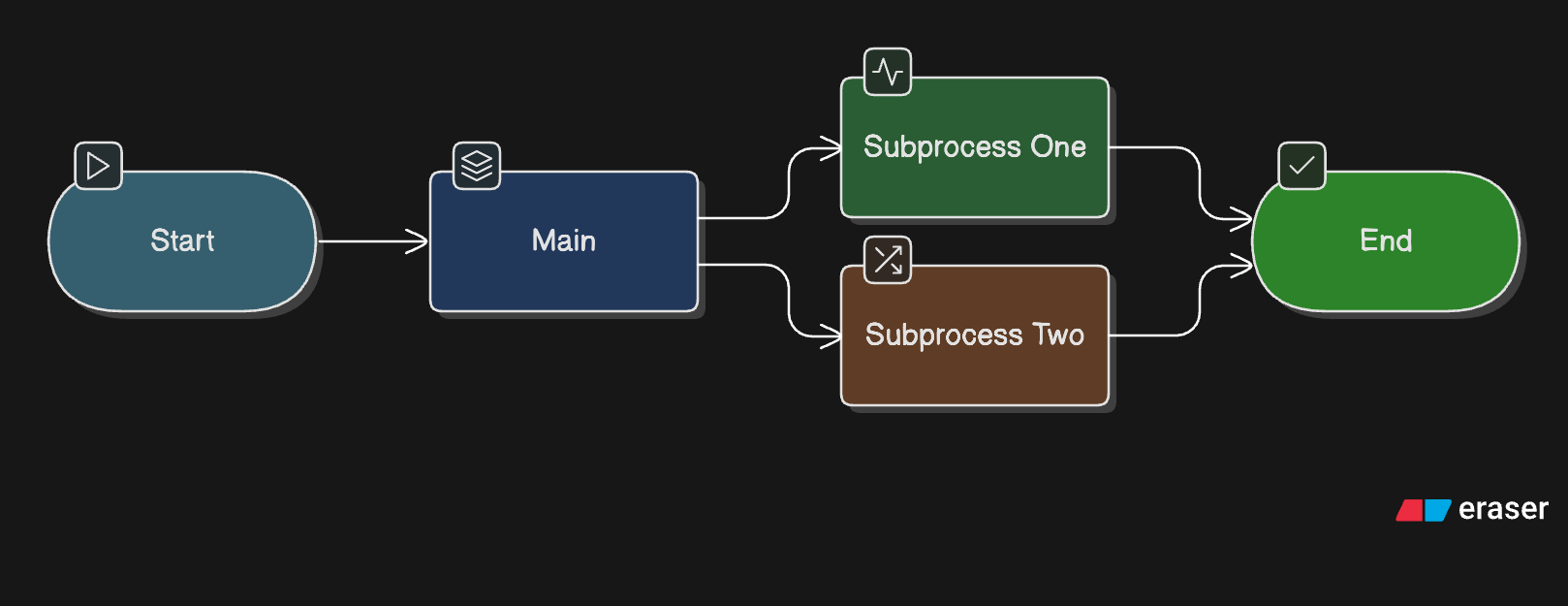
Subagents
Run inside one session
Don’t talk to each other
Great for one-off tasks
Cheap and fast
Agent Teams
Each agent is a full session
Agents message each other directly
Designed for interdependent work
More expensive, much faster end-to-end
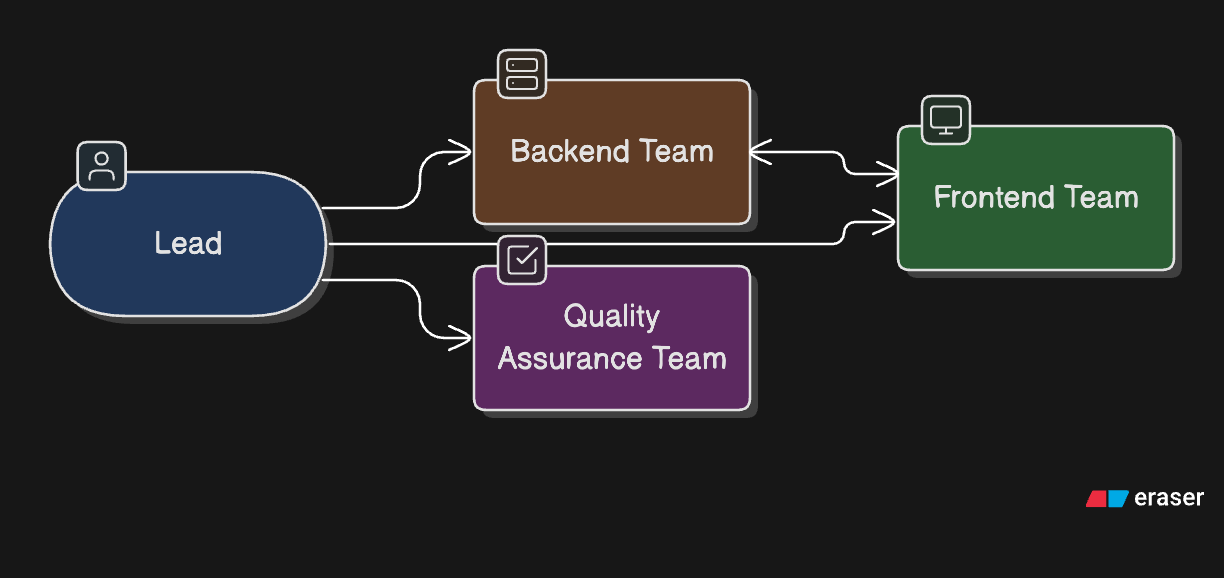
Subagents are function calls. Agent Teams are organizations.
Example: Shipping SSO Authentication
an example Claude Code prompt:
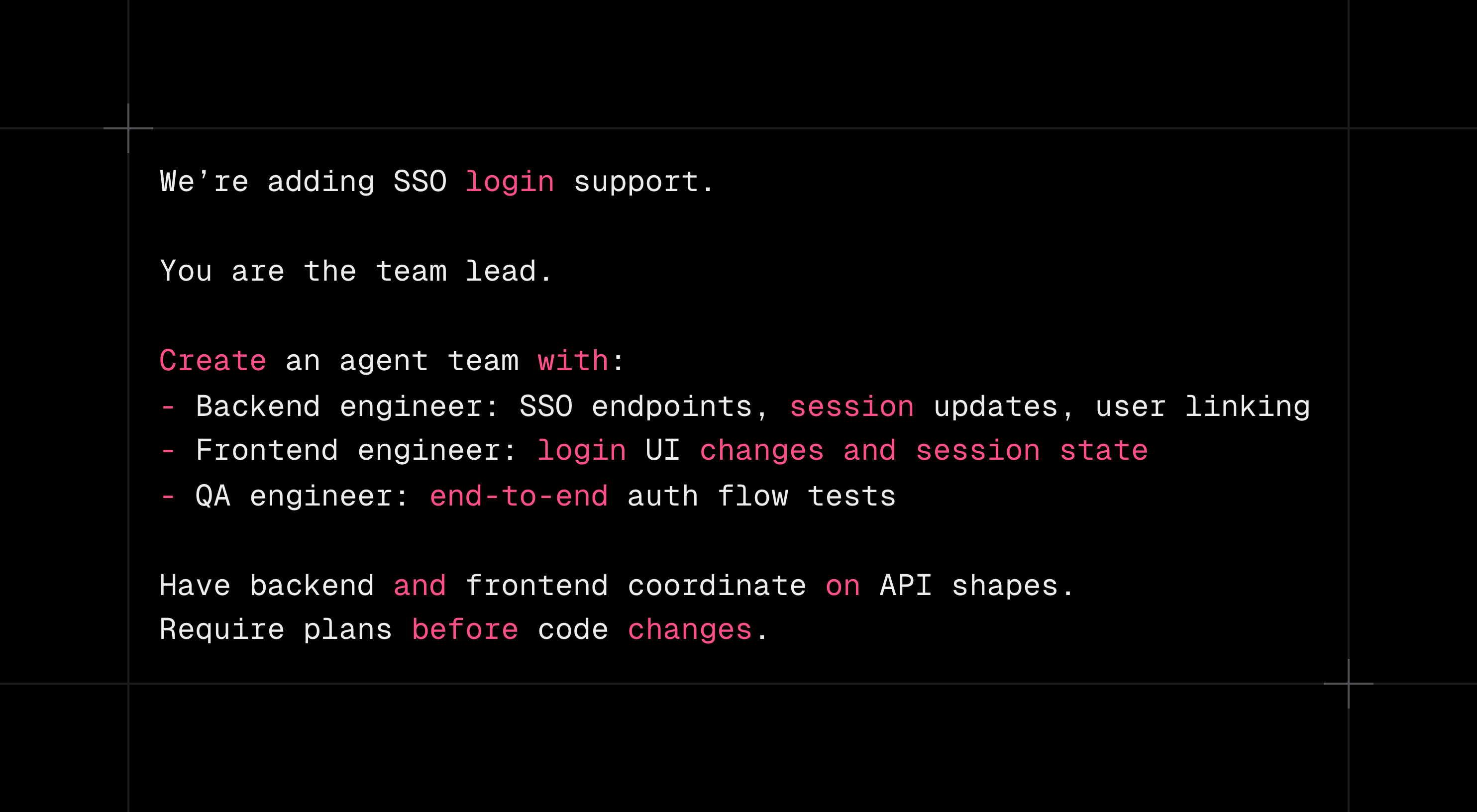
What’s powerful here isn’t speed alone, it’s early alignment.
👉 Backend and frontend negotiate interfaces before code solidifies.
👉 QA raises edge cases before merge.
👉 The lead resolves conflicts at the system level.
Delegate Mode: Think Like an EM
one feature that stood out strongly during research is delegate mode.
here is an example prompt:
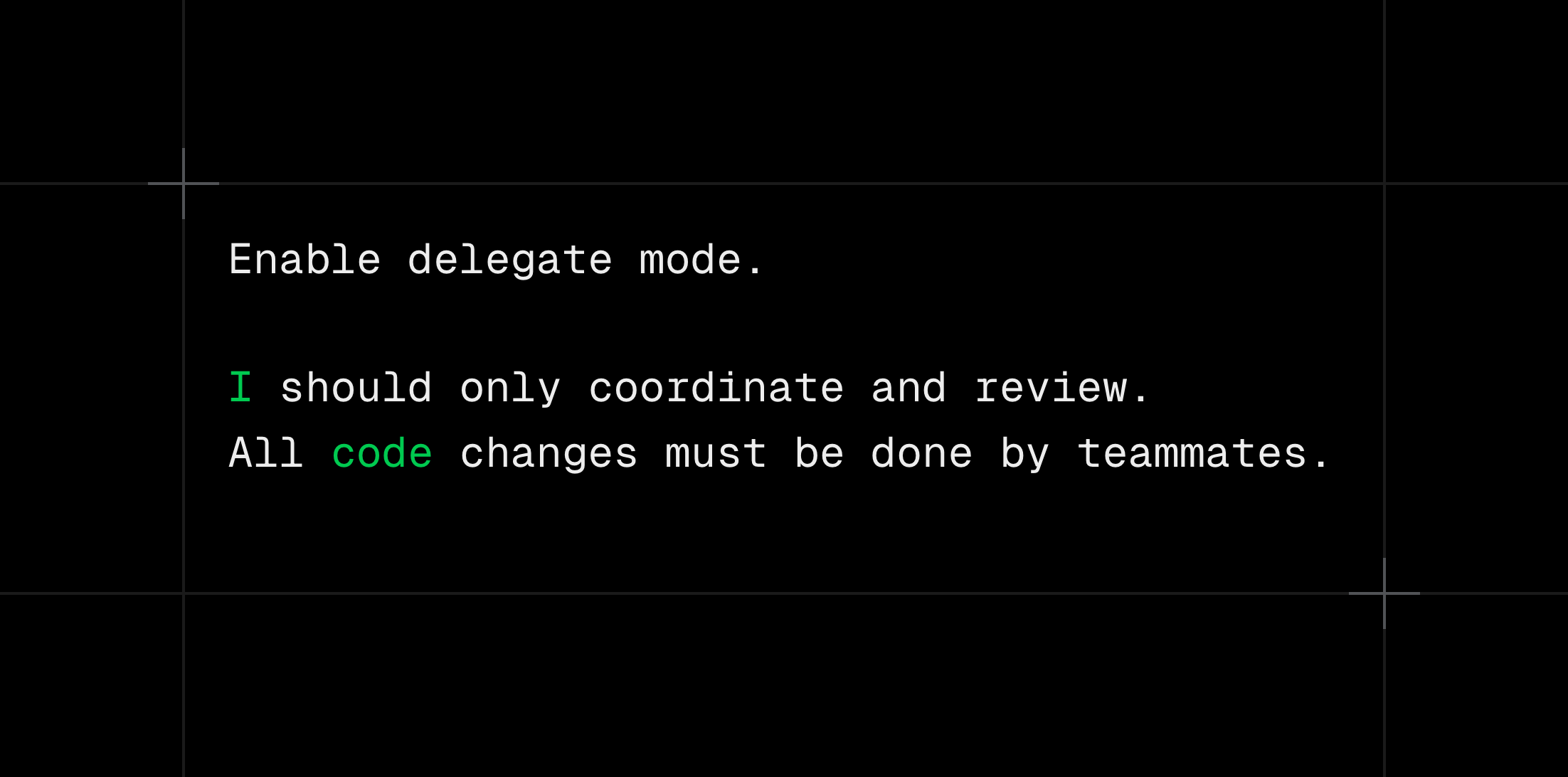
this forces a clean separation:
you design and review
agents implement
It’s a subtle shift, but it pushes you into the right mental model:
AI as engineers, not magic.
When Agent Teams Make Sense
they’re great fits for:
multi-layer features
large refactors
parallel research + implementation
design debates
and they’re bad fits for:
small, isolated tasks
simple code generation
extreme cost sensitivity
🚨 Docs and community reports consistently note:
A team can cost ~3–4× the tokens of a single session 💰
some final thoughts..
this feature is brand new, so most people haven’t internalized what it enables yet.
but the direction is clear:
AI coding isn’t becoming about better prompts.
It’s becoming about better management.
if you learn to think in teams instead of prompts, you’ll be ahead of the curve. 🚀
follow me on LinkedIn @ Konstantin Borimechkov ❤️
thank you all for going through this blog-post and I hope it really gave you some value and food for thought next time you develop build software using AI!
let’s crush this next week! 🚀
The org structure framing is spot on. I keep running into people who think better prompts will fix context spillover, but it won't. You need isolation between concerns. What I find interesting is how skills fit into this picture too. The multi-agent setup works better when each agent has clearly scoped instructions it can load on demand rather than dumping everything into one massive system prompt. I dug into the fragmentation side of this recently; every tool from Cursor to Copilot has invented its own way of handling agent instructions, which makes the skills interoperability angle even more important: https://blog.devgenius.io/agent-skills-explained-teaching-your-ai-assistant-new-tricks-c6ee66a632c4
The organizational structure angle is spot on. I've been managing a multi-agent setup for a couple months and the biggest surprise wasn't technical capability - it was how much it feels like managing actual junior engineers.
You write tasks, check their work, tell them when they're going down a rabbit hole. The failure modes are even similar: agents get stuck on details, sometimes ignore constraints, occasionally deliver exactly what you asked for but not what you meant.
Has anyone figured out good patterns for code review with agents? Right now I'm treating it like PR review, but that might not be the right mental model.